Ramen français au canard et aux champignons #33
Verdict — Je suis très content du résultat, même si j’ai raté à mon sens la présentation des nouilles dans ce dernier bol. Concernant le ramen, ça ne change que très peu par rapport au dernier test. Mais concernant la photo…
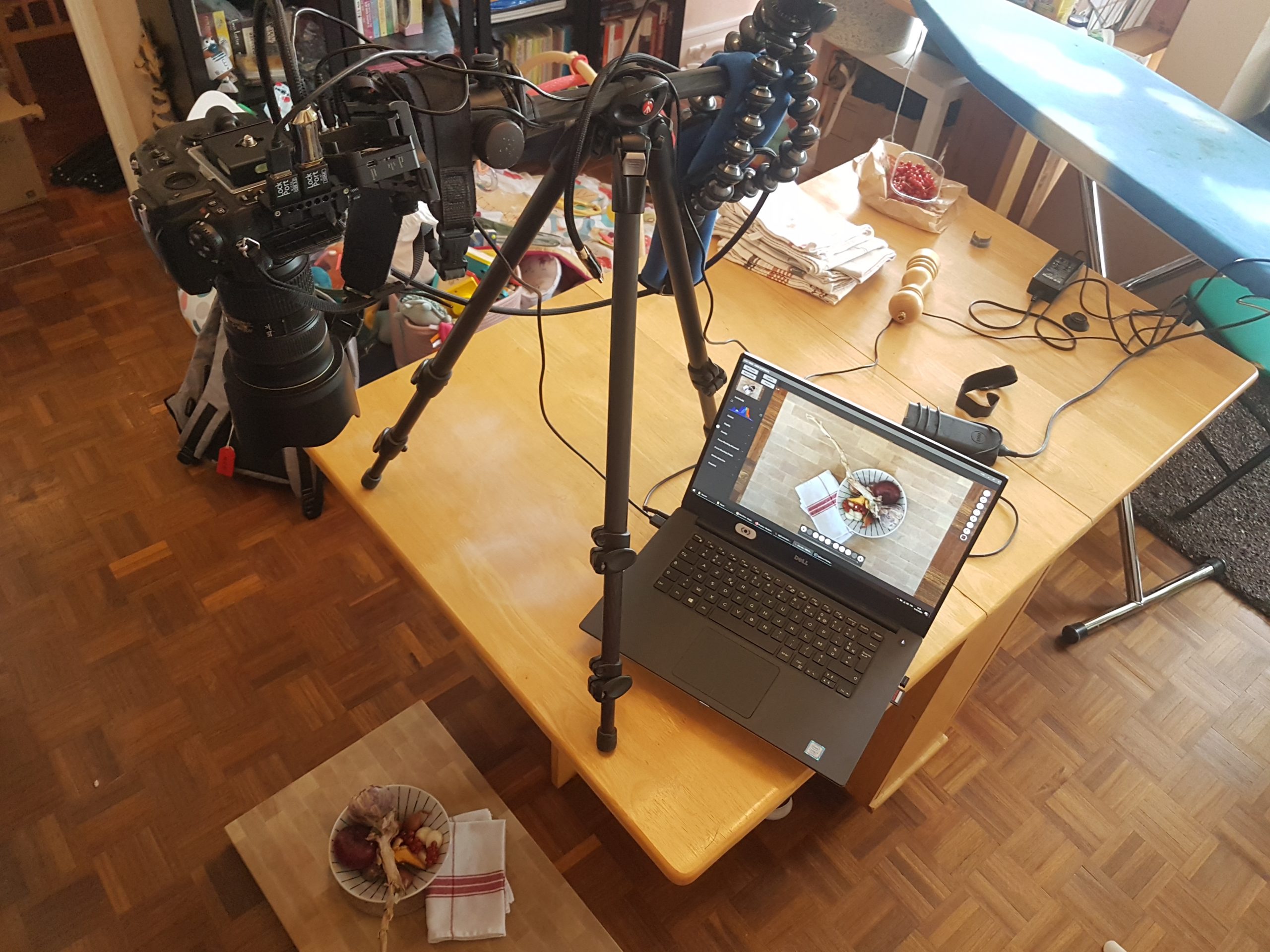
C’est la première fois que je fais une photo de ce style, avec autant de préparation (composition, éclairage, setup technique…), et une chose est certaine : c’est vraiment du boulot ! Une grosse partie du travail n’aurait pas été à faire si j’avais déjà eu une zone photo permanente installée chez moi, mais je n’ai pour l’instant pas la place pour ça… Peut-être quand je déménagerai ?
Ce concours a été une très bonne expérience, et même si j’y a passé beaucoup plus de temps que de raisonnable et que je ne sois arrivé qu’en 13è place au final, ça a été l’occasion de me challenger, de faire preuve de créativité, et de découvrir de nouvelles choses !
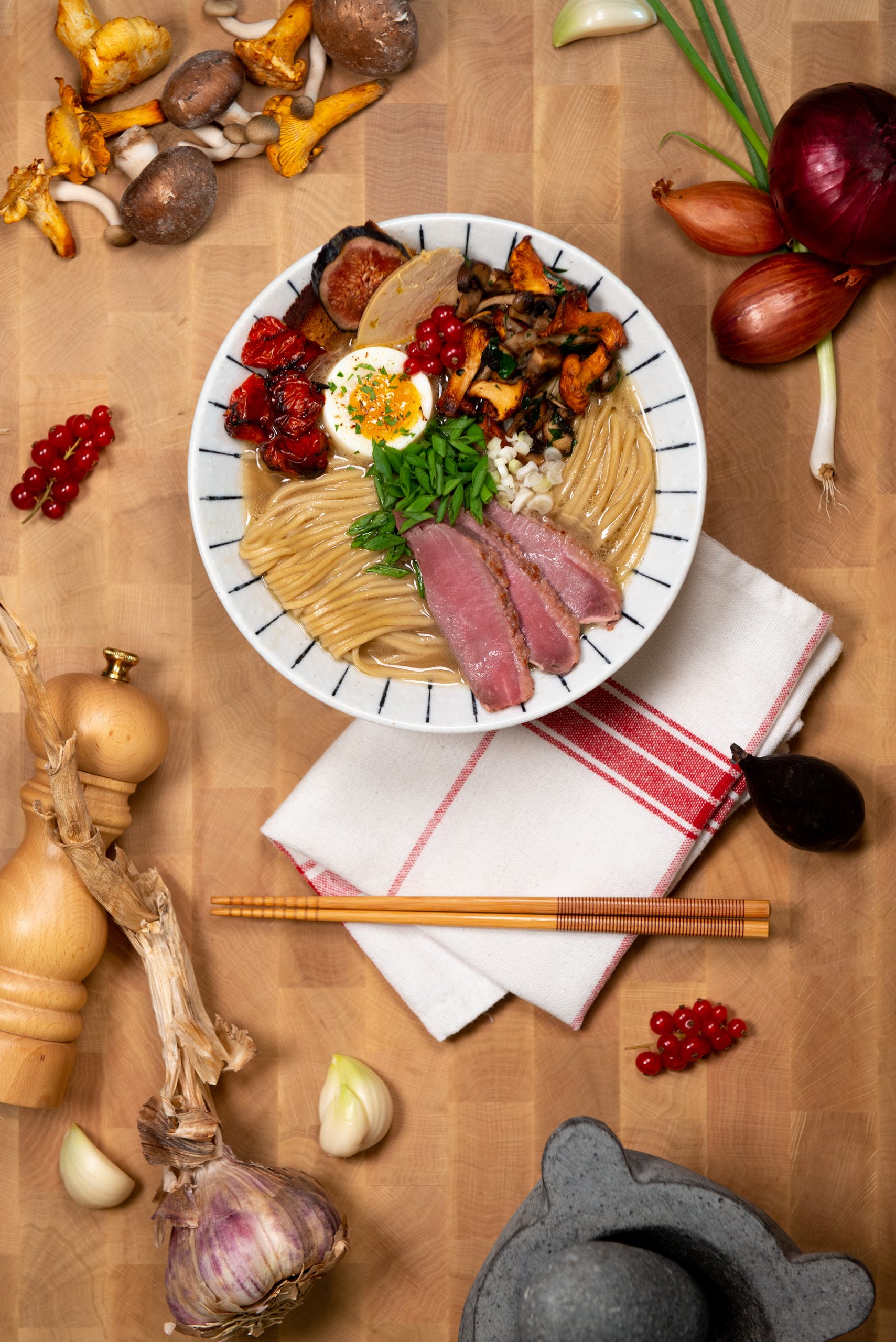
Ce bol a été soumis à un concours amateur organisé par WayOfRamen. Le thème était : faire un ramen régional avec des ingrédients locaux. Dans mon cas, j’ai choisi de faire un ramen de campagne française, avec du canard (bouillon, magret, foie gras), des champignons et un œuf à la coque.
Voici la description que j’ai envoyée lors de la soumission (en anglais) :
For a French ramen, there is a ton of ideas that could match the contest’s theme.
Naturally, one can immediately think of clichés like frog, snail, or red wine. I didn’t want to plunge into these clichés, so I thought of other typical French cuisine, a bit less "haute cuisine" and more into the traditional French cuisine from the countryside.
Duck is a well-known French specialty, and I think it pairs well with ramen. As duck ramen already exists in Japanese cuisine, I had to make it French. The best way to do this was to avoid the tastes that are characteristic of Japanese food, like shoyu or miso and emphasis on the duck and the toppings.
Mushrooms pair well with duck, and a lot of them grow in France and is used in French cuisine, like pleurotes (oyster mushroom) and morel. Even the standard everyday mushroom is called “Paris’ mushroom” in France… so it’s quite French. I decided to make a poêlée to concentrate the mushroom flavors so its taste would not be hidden by the broth.
Mushroom goes well with parsley, so I concluded that the greens of this dish would be parsley and ciboule (negi, from the oignon family).
Roasted mini tomatoes and currants are mini sour bombs that punch you periodically out of the mellow taste of the duck and the mushrooms, and it gives complexity to the dish as well as enjoyable decorative red spots in the bowl.
To go further in the duck theme, I used the breast to make a "magret de canard" that is typical of French cuisine. It had to be very tender to be edible without knife and fork (without having to cut it), so I used shio koji to tenderize it, then cooked it sous-vide since it’s the best way to cook duck breast, and then pan-fried the already-transformed-into-gelatin skin to give a good Maillard taste. The round characteristic taste of the duck breast underlines well the mellowness of the broth.
Of course, ramen often goes with an egg topping. Many people crave for it in a ramen, and it’s really compatible with this bowl. Soft boiled egg is often eaten in France as "œuf à la coque". It’s simple and yet tasty. For it not to be too bland, I used coarse mineral sea salt (known as "fleur de sel"), red pepper, and of course parsley again.
But French cuisine being often highlighted with classy stuff, I couldn’t avoid the duck’s foie gras, since the theme of this dish was duck! :) I precisely had an artisanal one I bought in Corrèze on a trip a while ago that I could use here. Foie gras is well known to be awesome paired with sweet flavors, and is traditionally served as a slice on gingerbread and fresh fig.
I gave the noodles a medium thickness to give enough chew so their texture would not be too far from the duck breast. I tried doing mushroom noodles, but the overall taste of the ramen was too mushroomy and so not correctly balanced. Here, normal noodles let the duck shine in this dish.
Same with the shio tare and aromatic oil. I kept things simple not to hide or impair the duck’s and mushroom’s aromas. And with all this, the broth naturally had to be a paitan.
Bouillon
~300 g de bouillon de canard de barbarie. Voir le Ramen français au canard et aux champignons #30.
Tare
Voir recette dans le Tori shio ramen #11.
Nouilles
Voir le Ramen français au canard et aux champignons #31.
140 g, cuisson 2"10.
Magret de canard
Voir le Ramen français au canard et aux champignons #30.
Autres
- Huile aromatique : graisse de canard
- Poêlée de champignons à la forestière
- Saisir à feu fort des champignons de Paris, des girolles, des pleurotes, et des shimejis dans un fond de graisse de canard
- Ajouter en fin de cuisson du persil cisaillé, du sel et du poivre
- Mini-tomates roties au four
- Œuf à la coque
- Ciboulette (blanc et vert)
- Canapé de fois gras de Tulle sur pain d’épices et tranche de figue
- Groseilles
- Poivre du Kampot